Archives for category: Articles

sunrise

Philippians 4:6-7
6 Be careful for nothing; but in every thing by prayer and supplication with thanksgiving let your requests be made known unto God.
7 And the peace of God, which passeth all understanding, shall keep your hearts and minds through Christ Jesus.

1 Peter 5:6-7
6 Humble yourselves therefore under the mighty hand of God, that he may exalt you in due time:
7 Casting all your care upon him; for he careth for you.

The Bible says to cast your cares on Him. Have you ever wondered how to do that? Here is one procedure:

1) Problem
2) Tempted to worry
3) Remind myself that Almighty God has great compassion for me and He said for me to cast my cares on Him
4) Pray about my problem
5) Stop praying about my problem
6) Meditate on Psalm 23, instead of meditating on my problem.

Consider the stability of the Rock of Ages, instead of your precarious situation. Focus on the size of your God, rather than the size of your concern. Strengthen your faith by worshipping God.

Job 37:14 Hearken unto this, O Job: stand still, and consider the wondrous works of God.

Isaiah 26:3-4
3 Thou wilt keep [him] in perfect peace, [whose] mind [is] stayed [on thee:] because he trusteth in thee.
4 Trust ye in the LORD for ever: for in the LORD JEHOVAH [is] everlasting strength:

Want to hear more?

sharpenAxe

Proverbs 13:4 The soul of the sluggard desireth, and [hath] nothing: but the soul of the diligent shall be made fat.

Being a sluggard, according to Solomon, is the opposite of being diligent. He says the diligent will be well fed, but the Bible does not have anything good to say about the sluggard.

Proverbs 6:4-11
4 Give not sleep to thine eyes, nor slumber to thine eyelids.
5 Deliver thyself as a roe from the hand [of the hunter,] and as a bird from the hand of the fowler.
6 Go to the ant, thou sluggard; consider her ways, and be wise:
7 Which having no guide, overseer, or ruler,
8 Provideth her meat in the summer, [and] gathereth her food in the harvest.
9 How long wilt thou sleep, O sluggard? when wilt thou arise out of thy sleep?
10 [Yet] a little sleep, a little slumber, a little folding of the hands to sleep:
11 So shall thy poverty come as one that travelleth, and thy want as an armed man.

Proverbs 10:26 As vinegar to the teeth, and as smoke to the eyes, so [is] the sluggard to them that send him.

Proverbs 20:4 The sluggard will not plow by reason of the cold; [therefore] shall he beg in harvest, and [have] nothing.

Proverbs 26:16 The sluggard [is] wiser in his own conceit than seven men that can render a reason.

Proverbs 26:12 Seest thou a man wise in his own conceit? [there is] more hope of a fool than of him.

Proverbs 27:22 Though thou shouldest bray a fool in a mortar among wheat with a pestle, [yet] will not his foolishness depart from him.

People try to avoid work, thinking they will enjoy life more by doing less challenging tasks. This is not wise and accomplishes worse than failure in its objective.

Want to hear more?

throne

James 2:19 Thou believest that there is one God; thou doest well: the devils also believe, and tremble.

So, unless you are satisfied with devilish faith, it is going to take something more than a belief in God.

Matthew 10:32 Whosoever therefore shall confess me before men, him will I confess also before my Father which is in Heaven.

Romans 10:9-10
9 That if thou shalt confess with thy mouth the Lord Jesus, and shalt believe in thine heart that God hath raised him from the dead, thou shalt be saved.
10 For with the heart man believeth unto righteousness; and with the mouth confession is made unto salvation.

When a word is spoken, yet is not true, that is not a confession. Is He your Lord? Is He on the throne of your life? Do you believe that He knows best? Or do you pick and choose which parts of God’s Word you will follow, putting your own authority above The Author?

Hebrews 11:6 But without faith [it is] impossible to please [him:] for he that cometh to God must believe that he is, and [that] he is a rewarder of them that diligently seek him.

Upon what have you placed your faith? A god with a small “g” who can be served conveniently? Or the Creator of the cosmos, of Whom you beg for wisdom?

Proverbs 14:27 The fear of the LORD [is] a fountain of life, to depart from the snares of death.

Job 1:1 There was a man in the land of Uz, whose name [was] Job; and that man was perfect and upright, and one that feared God, and eschewed evil.

James 2:26 For as the body without the spirit is dead, so faith without works is dead also.

Matthew 5:6 Blessed [are] they which do hunger and thirst after righteousness: for they shall be filled.

Want to hear more?

CambodianOrphans

We would like to share with you some information about a ministry that we can endorse wholeheartedly. The name of the ministry is North Country Baptist Children’s Home.

This is an orphanage in Cambodia with a capacity for 100 children. As of this writing, they are caring for 37 orphans.

You can donate monthly to sponsor a child, so they will be able to take in more orphans. Or you can give a one-time gift to help, for example, with needs that they share through their newsletters. Please see their website for more details.

http://www.ncbch.com

James 1:27 Pure religion and undefiled before God and the Father is this, To visit the fatherless and widows in their affliction, [and] to keep himself unspotted from the world.

Want to hear more?

CambodianOrphanage

handshake

Luke 21:16-17
16 And ye shall be betrayed both by parents, and brethren, and kinsfolks, and friends; and [some] of you shall they cause to be put to death.
17 And ye shall be hated of all [men] for my name’s sake.

Matthew 10:34-36
34 Think not that I am come to send peace on Earth: I came not to send peace, but a sword.
35 For I am come to set a man at variance against his father, and the daughter against her mother, and the daughter in law against her mother in law.
36 And a man’s foes [shall be] they of his own household.

Jesus told us this would happen. It is some of our closest friends and relatives that have hurt us the most. What Jesus did not say was that we should attempt to avoid this pain via isolation. Relationships with healthy ties are worth the risk.

Proverbs 17:17 A friend loveth at all times, and a brother is born for adversity.

Like Jonathan for David, we find out who our real friends are when the troubles come. Other times, it is more like Judas.

Job 42:10 And the LORD turned the captivity of Job, when he prayed for his friends: also the LORD gave Job twice as much as he had before.

3 John 13-14
13 I had many things to write, but I will not with ink and pen write unto thee:
14 But I trust I shall shortly see thee, and we shall speak face to face. Peace [be] to thee. [Our] friends salute thee. Greet the friends by name.

John 15:12-13
12 This is my commandment, That ye love one another, as I have loved you.
13 Greater love hath no man than this, that a man lay down his life for his friends.

Want to hear more?

leak-quote

What if I had no compassion for the poor? What if I had no compassion for the lost? What if I grudgingly laboured for Christ only out of duty and self-righteousness? What if my only reason for ministry is to avoid feeling guilty for not doing so? In contrast, what if God put His compassion for the poor and the lost into my heart? My heart would soften. I would rejoice in being the bearer of God’s love. I would be blessed by being a blessing. I would grow in my desire for the lost sheep to come to my Shepherd.

1 Corinthians 13:3 And though I bestow all my goods to feed [the poor,] and though I give my body to be burned, and have not charity, it profiteth me nothing.

Isaiah 64:6 … we are all as an unclean [thing,] and all our righteousnesses [are] as filthy rags; and we all do fade as a leaf; and our iniquities, like the wind, have taken us away.

Filthy rags, that is the value of our self-righteousness. That sounds more counter productive, rather than a contribution. God does not need your money, but His Face shines on generous hearts. God does not need your ministry, but He allows us the blessing of partnering with Him. What a Partner!

Judges 7:2 And the LORD said unto Gideon, The people that [are] with thee [are] too many for me to give the Midianites into their hands, lest Israel vaunt themselves against me, saying, Mine own hand hath saved me.

Meagre physical assets hinders not God in His work. On the contrary, as in the case of Gideon’s army, numerous earthly resources can detract from God getting the rightful credit in the victory. It is far better to glorify God, so that our faith is strengthened.

2 Corinthians 9:6-12
6 But this [I say,] He which soweth sparingly shall reap also sparingly; and he which soweth bountifully shall reap also bountifully.
7 Every man according as he purposeth in his heart, [so let him give;] not grudgingly, or of necessity: for God loveth a cheerful giver.
8 And God [is] able to make all grace abound toward you; that ye, always having all sufficiency in all [things,] may abound to every good work:
9 (As it is written, He hath dispersed abroad; he hath given to the poor: his righteousness remaineth for ever.
10 Now he that ministereth seed to the sower both minister bread for [your] food, and multiply your seed sown, and increase the fruits of your righteousness;)
11 Being enriched in every thing to all bountifulness, which causeth through us thanksgiving to God.
12 For the administration of this service not only supplieth the want of the saints, but is abundant also by many thanksgivings unto God;

Bountiful giving is not merely a measure of the size of the gift. It is a measure of the size of our desire to give. Of course, in some situations, this will result in large gifts, and there is nothing wrong with that. For others, it will be more like the widow’s two mites, also highly regarded by Our Lord Jesus Christ.

Luke 6:38 Give, and it shall be given unto you; good measure, pressed down, and shaken together, and running over, shall men give into your bosom. For with the same measure that ye mete withal it shall be measured to you again.

Want to hear more?

elders

In the book of Job, his own complaints and arguments, are categorized, by God, as “words without knowledge.” Also, all of the speeches that his three friends made, God condemned as folly. In contrast, the reason that Elihu’s words are recorded in Scripture, is because he was a prophet of God. It seems that God inspired Elihu to make the introductory speech in preparation for God Himself to arrive and say what no human preacher could say.

The unnamed narrator of the book of Job is also a prophet inspired of God. In the narration, the reasons for Elihu’s admonition are introduced. In both the narration, and during Elihu’s speech, it is pointed out that Elihu honoured his elders.

Job 32:6-7
6 And Elihu the son of Barachel the Buzite answered and said, I [am] young, and ye [are] very old; wherefore I was afraid, and durst not show you mine opinion.
7 I said, Days should speak, and multitude of years should teach wisdom.

Here we have a rare situation. A prophet of God, who is not an elder, is in a position where his honour for his elders is tested and exercised. His response is approved as inspired of God, as an installment to God’s Holy Word. By examining the Scriptures, and using Elihu as a godly example, we can hope to get a better understanding of what it means to honour our elders in a Biblical way. We can even learn of some things it does not mean to honour our elders.

Similar to Timothy and Jeremiah, we find that Elihu had a ministry, even though he was not an elder.

1 Timothy 4:11-14
11 These things command and teach.
12 Let no man despise thy youth; but be thou an example of the believers, in word, in conversation, in charity, in spirit, in faith, in purity.
13 Till I come, give attendance to reading, to exhortation, to doctrine.
14 Neglect not the gift that is in thee, which was given thee by prophecy, with the laying on of the hands of the presbytery.

Thus, from these biblical examples, we can see that honouring our elders does not mean that we are to leave all of the work of ministry to the elders. It may seem like we are being humble by deferring these hallowed roles to those with more experience, but that is not God’s design that He has patterned for us in His Word. Yes, there are some ministry roles that the Holy Bible directs to be filled by elders, just not all of them.

Another aspect that is not included in biblically honouring our elders, is that they are always to be deemed as correct, when there is a disagreement, just because they are older. Elihu made it very clear that his elders, Job, Eliphaz, Bildad and Zophar were wrong. This was not just a difference of opinion between Elihu and the four. Elihu found the four to be in error, compared to Truth Itself.

Job 32
2 … against Job … because he justified himself rather than God.
3 Also against his three friends … because they had found no answer, and [yet] had condemned Job.

Job, as an elder, was to be admonished for his poor treatment of God’s glory. Job’s three friends, as elders, were to be admonished for publicly condemning Job because they assumed he was guilty, not because they knew he was guilty.

It was not as though Elihu considered his preferences to be more important than others’. He did not even take credit for his own point of view. He acknowledged that the wisdom that he had been taught came as a gift from God.

Job 36:3 I will fetch my knowledge from afar, and will ascribe righteousness to my Maker.

Job 32:8 But [there is] a spirit in man: and the inspiration of the Almighty giveth them understanding.

There are some that consider flattering titles to be required in the honour that is to be given to elders. The Bible says just the opposite when Elihu says,

Job 32:21-22
21 Let me not, I pray you, accept any man’s person, neither let me give flattering titles unto man.
22 For I know not to give flattering titles; [in so doing] my maker would soon take me away.

This agrees with what Jesus said also.

Matthew 23
Then spake Jesus to the multitude, and to his disciples, Saying, The scribes and the Pharisees … love … to be called of men, Rabbi, Rabbi. But be not ye called Rabbi: for one is your Master, [even] Christ; and all ye are brethren.

OK, admittedly, most of this article is talking about what honouring elders is not. Now what does the Bible say Elihu did as an expression of honour to these elders?

Elihu waited until his elders were done talking.

Job 32:4 Now Elihu had waited till Job had spoken, because they [were] elder than he.

Also, he didn’t just wait, he was attentively listening to his elders.

Job 32:11-12a
11 Behold, I waited for your words; I gave ear to your reasons, whilst ye searched out what to say.
12 Yea, I attended unto you, …

We can also see that Elihu was attentive, since he quotes Job multiple times. Also, he tells the three friends that he will not be using any of their speeches. Elihu was not just waiting for them to shut up, so he could talk, he was testing these teachings, compared to God’s Word, as he listened.

Further, he didn’t just wait, he didn’t even start until they were done talking.

Job 31:40b … The words of Job are ended.

Job 32:1a So these three men ceased to answer Job …

Job 32:16 When I had waited, (for they spake not, but stood still, [and] answered no more;)

Considering the context, we would not propose that this is a doctrine that must be strictly followed in this specific method for every occasion. The spirit of the principle is to hear them out. To honour our elders, we let them have their say in the matter. In this case, there were already elders rebuking each other, so Elihu was probably giving them space to sort it out themselves.

Another honour that Elihu bestowed upon these elders is to treat them with dignity, as astute men of wisdom. Several times, as he reasons with them, he either states or implies that they are men of understanding and prudence, so they are quite capable of grasping the truth of what God has revealed.

Elihu did not admonish these elders just because they were wrong, but to defend God’s glory and holiness. So, we will conclude this article with some samples of the same.

Job 33:12 Behold, [in] this thou art not just: I will answer thee, that God is greater than man.

Job 34:10 Therefore hearken unto me, ye men of understanding: far be it from God, [that he should do] wickedness; and [from] the Almighty, [that he should commit] iniquity.

Job 34:12 Yea, surely God will not do wickedly, neither will the Almighty pervert judgment.

Job 36:2-3
2 Suffer me a little, and I will show thee that [I have] yet to speak on God’s behalf.
3 I will fetch my knowledge from afar, and will ascribe righteousness to my Maker.

Job 36:5 Behold, God [is] mighty, and despiseth not [any: he is] mighty in strength [and] wisdom.

Job 36:22-26
22 Behold, God exalteth by his power: who teacheth like him?
23 Who hath enjoined him his way? or who can say, Thou hast wrought iniquity?
24 Remember that thou magnify his work, which men behold.
25 Every man may see it; man may behold [it] afar off.
26 Behold, God [is] great, and we know [him] not, neither can the number of his years be searched out.

Job 37:2-5
2 Hear attentively the noise of his voice, and the sound [that] goeth out of his mouth.
3 He directeth it under the whole heaven, and his lightning unto the ends of the earth.
4 After it a voice roareth: he thundereth with the voice of his excellency; and he will not stay them when his voice is heard.
5 God thundereth marvellously with his voice; great things doeth he, which we cannot comprehend.

Job 37:23-24
23 [Touching] the Almighty, we cannot find him out: [he is] excellent in power, and in judgment, and in plenty of justice: he will not afflict.
24 Men do therefore fear him: he respecteth not any [that are] wise of heart.

Job 37:14 Hearken unto this, O Job: stand still, and consider the wondrous works of God.

Want to hear more?

Aesop

Mark 6:4 Jesus said unto them, A prophet is not without honour, but in his own country, and among his own kin, and in his own house.

In Aesop’s fable, it was proper for the fox to be in awe when seeing the lion. People can seem to become commonplace, especially those closest to us, and the temptation can grow to lose our appreciation and honor due to each human.

How much value does God place on one person? At conception, a precious human life begins. So precious, that it will never end. That soul is eternal, as ordained by God.

The more we learn about the masterful details of design in creation, the more awe inspiring this pursuit of study becomes. Yet, at the same time, it is easy to see that paradise has been lost, cursed, marred by sin. We can still appreciate those scenes of breathtaking beauty. And those amazing designs remain to challenge our comprehension and discovery.

Each human soul bears the image of God. The astounding design of each person, the elegant complexity of the alloyed spirit, mind, and body, is exceptional. Yet …

All we like sheep have gone astray; we have turned every one to his own way; … (Isaiah 53:6)

A lost coin does not lose its value because it is lost. It is that intact value that motivates us to search for the coin. The higher the value, the more diligent and persevering the search. So, now read the whole verse.

Isaiah 53:6 All we like sheep have gone astray; we have turned every one to his own way; and the LORD hath laid on him the iniquity of us all.

The stunning price paid; for each one; for you.

Hebrews 12:2 Looking unto Jesus the author and finisher of [our] faith; who for the joy that was set before him endured the cross, despising the shame, and is set down at the right hand of the throne of God.

What joy was set before him?

You.

You are worth it … to Him … your salvation … your reconciliation to Him … your fellowship with Him … is His joy!

By no means does this say that you deserve God’s grace. The very definition of grace indicates that it is not deserved. God knows we don’t deserve to be pardoned, yet He also reckons that it is worth it. How much value does God place on one person? God did not value you any less than what He paid.

Yours is a unique life. You are rare; special. The creator of matter says that you matter. Regardless of how close to God you are, or how far from God you are right now, He still holds out His hand to offer a closer relationship with Him.

If you feel angry, then you are angry. If you feel worthless, that does NOT mean you are worthless! If you feel sad, then you are sad. If you feel irrelevant, then that feeling is a LIE! Yes, you are having that emotion, but that does not indicate that you are expendable. Do you see the distinction? Grasping this concept is vital. Feelings and emotions tell you about your state of mind, not your value.

In all the world, there is nothing more precious than an individual human being.

By God’s majestic grace and decree, each soul is due honor, as a fellow human, bearing the image of the Creator.

Want to hear more?

physics-formula-vectors

Many prefer the elegance of simplicity, and who can blame them? It is very nice when something is simple or easy to understand. We are naturally drawn to scenes of organized and predictable arrangements. There are many occasions when we can hunt down, or create, these manageable solutions and enjoy the benefits of such a reliable system.

Life is complicated. Sometimes we can just avoid those knotty situations, but sometimes such avoidance would be sinful negligence. Complexity in life is not going to go away, just because we prefer simplicity. We may be tempted to treat complex issues as if they were elementary.

This is just speaking in generalities, so here is an example. Church discipline is complicated. Thus, it requires much prayer, and probably fasting, for wisdom and guidance, backed by several years of Bible study. That is just an example. You can probably think of several more cases where much diligence, discretion, or responsibility is due.

Much value is added when we make the effort to simplify, yet it rarely happens without this effort. There are portions of the Bible that are easy to study. In contrast, there are some doctrinal topics that are difficult to understand. A preacher does a great service for his audience when he studies the Holy Bible for many hours, then shares some simple insights that God provided. The congregation will never get, from the sermon, the full benefit that the preacher got from the study. But, if they are attentive, they may receive far more listening to a half-hour of preaching than they would have received from a half-hour of Bible study. Among other blessings, this is one profit we receive from the prophet.

1 Timothy 5:17 Let the elders that rule well be counted worthy of double honour, especially they who labour in the word and doctrine.

Want to hear more?

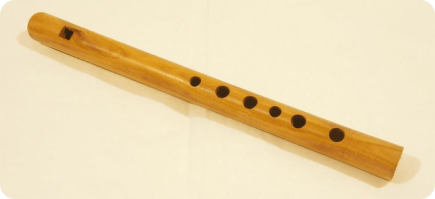
wooden-tin-whistleceltic-harp

There are some who believe that the New Testament teaches us not to use instruments in our music; only “a cappella” is allowed. Here is their line of reasoning, as I have heard. One principle of Bible interpretation, that they espouse, is that only the New Testament abides as our source of doctrine. So, any doctrine that is not established in the New Testament, is no longer valid for the church today. Using instruments in music is encouraged, even commanded at times, in the Old Testament, but not mentioned in the New Testament. Thus, they conclude, we are to do away with this practice. There are two fallacies in this interpretation that we will point out.

The first error is that this is not a valid distinction between the Old and New Testaments of the Holy Bible, as a principle of Bible interpretation. Jesus explains that this is improper.

Matthew 5:17-18
17 Think not that I am come to destroy the law, or the prophets: I am not come to destroy, but to fulfil.
18 For verily I say unto you, Till Heaven and Earth pass, one jot or one tittle shall in no wise pass from the law, till all be fulfilled.

There are multiple principles of Bible interpretation to help us decide which Old Testament statutes are still binding on us in the New Testament, and we will not be expounding on those. The main point of this article is to explain that this one false principle is to be omitted. Yes, we are in a new dispensation, i.e., God has now revealed additional information to us in the New Testament. That does not mean that we are to completely start over. God does not change, yet He had reason to change His covenant with us. For example, the sacrifices were fulfilled in the suffering and death of Christ.

There are some abominable evils, that I could mention as examples. These sins are clearly condemned by God in the Old Testament, and no biblicist would argue that they should be considered righteous behaviour in the New Testament, yet they are not mentioned in the New Testament. This shows us where such a method would lead us, if consistently applied.

The second error is revealed by the fact that musical instruments are used in Heaven, as ordained by God. This supersedes any silence, on the Church practice, in the New Testament. This is not to imply that anything and everything that is allowed in Heaven is also allowed in the Body of Christ. Yet it does establish that there is no general ban on the use of musical instruments, as far as God is concerned. This heavenly precedent would be foundational to any dispensation or covenant.

Though this is controversial, some claim the authority of the tradition of the early church fathers to confirm this shunning of musical instruments. Even if this were true, the Word of God is the sole authority for our faith and practice. Going beyond the boundaries of this authority, Jesus condemns as, “teaching for doctrine the commandments of men.” And He considers this “vain worship.”

Matthew 15:9 But in vain they do worship me, teaching [for] doctrines the commandments of men.

Want to hear more?