Archives for posts with tag: Job’s trial of faith

hand-sketching

In future posts, we are planning to show you a couple of character sketches. Much like the back story, much of the content of these sketches would not be directly included in the story.

We want the looks of each person to be distinctive from the others so it is easy to tell them apart in the movie and easy to visualize them in the book. The artwork in the book will be movie stills, so the individual’s specific details will largely be determined by casting.

Making a movie is a collaborative work of art. The unique talents of each person cast for the roles can be incorporated into the story and would somewhat change these character sketches and even, to a lesser degree, the plot of the story. For example, if one of the performers is also a musician, then we could weave in a sub-plot allowing for them to sing or play a song, though this movie will not be a musical.

Since this post was originally written, we have added two character sketches at the links below.

Character Sketch Of Elihu

Character Sketch Of Job’s Oldest Son

compromise

You have been repeatedly told that science has disproved The Holy Bible. Do you believe these claims, or do you believe the Bible? Have you decided?

Some take another approach. Instead of deciding which one is true, they make a compromise. They change plain teachings of the Bible to suit the latest fad.

The Bible does not allow a compromise, since it claims to be the Word of God. If the Bible is not true, then you would do well to find a trustworthy source of teaching, rather than attempting to decide which parts of the Bible are true, and “adjusting” the portions you find disagreeable; putting your own authority above The Author.

Science does not require a compromise. When the claims, regarding science disproving the Bible, are examined, it is found that they are merely opinions about the implications of science. The assertions themselves are not properties of nature which are observable, repeatable, and testable, which disqualifies the claims as being science. Rather, they are ideology, yet another faith, the faith of Secular Humanism. No true scientific evidence has ever contradicted the Bible. The contradiction is in the interpretation of the evidence.

This humanist interpretation is to be expected from humanists. The foundational purpose of these assertions is an attempt to explain origins from a completely naturalistic, or materialistic, view point. It is a thesis striving to answer the question, “How could existence have arisen without God?” Thus, this atheist ideology will see all scientific evidence in this light.

If Atheism is true, then the Bible is not true. If the Bible is true, then Atheism is not true. There is no point in compromising between the two, or trying to harmonize them.

John 3:12 If I have told you earthly things, and ye believe not, how shall ye believe, if I tell you [of] heavenly things?

Luke 16:31 And he said unto him, If they hear not Moses and the prophets, neither will they be persuaded, though one rose from the dead.

Want to hear more?

SampleCloth

Here is a rough draft of the beginning of The Job Project story line.

Introduction

Our Heavenly Father has given us a great gift in the Holy Bible’s book of Job. The Holy Creator has blessed us with a revelation of truth that we would not have known, a dispensation of wisdom. Thank the Lord for this gem, this precious treasure. Within the pages of this Biblical account is not only human history, but also heavenly history. The veil was pulled back enough to actually see what was happening in Heaven and how it affected human history. Then the veil was cast aside, for a time, when we heard the audible voice of God Himself preaching a sermon as only He could preach it.

The story, in this book and movie, surrounds the historical record of Job’s trial of faith and ties in other historical figures and events from the Bible. What was it like to live in the centuries after the flood, during the ice age? That is what the young lady in our story is trying to imagine. This is not a bad exercise. It is a form of meditating on Scripture.

One of the reasons that these historical events even happened is so that they could be recorded in Scripture and we could learn from them.

Thank you for joining us as we take a stroll within the Biblical boundaries of what might have happened.

The Tornado’s Approach

The green of the sea water cannot be seen over the distant plain, but it’s effect on the weather is quite apparent in the southern sky. As the mountainous clouds of the hurricane approach, many preparations are done, which have been practiced many times before over the stormy years. Many hearts turn from hurry to dread as the colour of the clouds start to take on a green hue.

This time is different than any other tornado in recent centuries, though, as the entire city is dumbfounded to hear music. From the distance is heard a massive brass orchestra, as if it were heralding the approach of the cyclone. It is a new song, composed and performed by Heaven Itself.

[Visual, from high above, of region with approaching hurricane, full of lightning flashes, to the Southwest of the city. The sky directly over the city is clearer, so the city can also be seen. The massive ziggurat is in the foreground with three tiers and huge zodiac sign carvings, three per side, covering the second tier. Just after the viewer descends below the level of the flat cloud ceiling of the hurricane spiral, a large lightning bolt strikes the apex of the building, still in the distance below, yet too close for comfort. As the viewer moves North, the canal can be seen reaching out into the plain to the West, extending the ship trade deep into the city.]

The majesty and power of the music is so compelling that all human activity stops West of the great river, from the region of the canal in the North, to the area around the great ziggurat in the South, as the wind halts, signifying the near presence of the powerful whirlwind.

[As the viewer approaches the heart of the city, the view turns to the West, seeing the funnel cloud, and bolts of lightning, in the plain outside the city. People are tentatively leaving the heavily fortified stone storm shelters, not knowing what to think of the music.]

It was as much as their hearts could take. But, then their hearts melted in terror when they heard the voice. Each thunderous word rolled echoes along the valley to the north.

Everyone knew the pronouncement of Eber that they would hear a message from God today, but no one could have imagined the form that it took.

A supernaturally large lightning bolt washes out the view of the tornado a split-second before the first word, “Who …” The thunderous voice shook the earth as the music continued. [Lightning bolt] “Is …” as the shout of a distant company of warriors, as the voice of many waters. [Lightning bolt] “This …” each word transformed to rolling thunder as its echo died.

Tea time

“Jane …” No response. “Hello … Jane,” her smiling mother persisted, slightly amused at her daughter’s daydreaming. Mom is coming into the parlour from the kitchen and found Jane gazing out the window at the springtime view of the garden, with a book open in her lap.

“Sorry … what Mom?” Jane said a bit sheepishly, shaking her head as if trying to wake up as she turned her head toward her mother.

“Sorry to interrupt your thoughts,” said Mom caringly, then smiled, “what were you dreaming about?” She sat down across from Jane to listen to her answer.

“I was imagining what it might of been like for them to hear the voice of God from the tornado. They must have been quite scared of the thunderous voice.”

“The tea is ready,” said Mom, “do you remember seeing the tornado when you were much younger?”

“Yes, I remember a green funnel-shaped cloud, but not very clearly. That was a nice visit to our family in Oklahoma. I was thinking about the Bible study this evening about the book of Job. The preacher said that it was the first book of the Bible that was written, so I wonder who wrote the book of Job.”

Mom stood up as she answered, “That sounds like a question for your dad. Let’s go see what he has to say about it after we get some tea for him.”

As they carry the tray over, they hear Dad and Jane’s brothers talking with some visiting guys about fishing, and stop to listen for awhile. As the banter wears down, Mom steps forward to offer the tea. Setting the tray down and pouring, she hands out cups and snacks while she talks to Dad. “Jane has a question for you about the Bible.”

“OK, what is your question?” He asked, then he sampled the snack and sipped the tea.

“Well, I was wondering who wrote the book of Job? Did Job write it himself?” She asked, then she sampled the snack and sipped the tea.

Finishing chewing and swallowing, “That’s what some of the commentaries say,” said Dad, “but the Bible doesn’t say, does it?” Then he took another bite.

“Not that I remember,” confirmed Jane, then she took another bite.

“So do we know who wrote it?” Asked Dad.

“I guess not, but who do you think wrote it Dad?”

Dad was thoughtful as he took another sip, then said, “Well, considering the high commendation of Job, it seems unlikely to me that he wrote it himself. His righteousness would prevent such boasting.”

“That makes sense to me too,” said Jane nodding thoughtfully.

Dad continued, “I think there must have been a prophet at the time who is not necessarily mentioned in the book of Job. He could have been the one to have the heavenly visions and to keep a historical record of these events. In the book of Job, there is a narrator, this would be the inspired prophet explaining how everything fits together and the lessons we can learn.” Then Dad took another sip and held up his finger as if he thought of something interesting, “If you notice carefully, after Job repents, God rebukes Job’s three friends, but this time it doesn’t say that God is speaking from the whirlwind any more. So, this message might have been delivered by the prophet as well.”

“Oh, I never thought of that, wow, thanks Dad!”

Jane’s brother chimed in, “Dad, what about when preacher said Elihu was preaching the gospel? I thought the gospel was in the New Testament.”

Dad thought through another sip, “In a way, the gospel is a New Testament thing, but not completely. The atoning blood of Christ was shed once for all human history. When we do baptism and communion, we are looking back to what Jesus did [as he points behind]. In the Old Testament, their rituals were looking forward to what the Messiah would do [as he points forward]. So, all believers in history are saved the same way.”

“OK, I get it, thanks Dad,” said his son, with his mouth full of food.

Dad half-smiled, slightly amused by his son’s garbled answer and said with a wink, “Some day, when you are more mature, you will eschew talking with food in your mouth.”

Fishing trip prep

As Jane walks away, sipping tea, her imagination gets the best of her again as she finds a comfortable chair. As she sits, you can see in her hand a book called “The Puzzle of Ancient Man” with her finger holding her place.

Want to hear more?


hello-in-100-languages

The concept of having “back story” is that little to none of this would be included in the book or screen play. There would just be hints, implications, or assumptions that touch on these topics, giving depth to the cultural setting of the story. Here is some of the back story regarding the impact of the Babel dispersion.

It took about a hundred years, but the technology was finally re-established, and in full production to again make the pre-flood product, beetle lights. These lights mimic the light production of the illuminated insects that use chemicals to produce a cold light in a pale yellow colour, with a touch of green.

The light from this device is intense enough that it is ample for reading, more so than a candle. The appliance itself is a medium-sized box, with a triangle-shaped knob on the side to turn on the light with a clockwise turn, then off again with another clockwise turn. The light comes out the entire bottom and the lower half of one side of the box.

The top of the box has a lid that opens to add fruit scraps. The first stage of the chemicals in the appliance convert the fruit into the chemicals needed for the second stage, that produces the light. The apparatus lasts for several years of daily use, then the chemicals run out and it needs to be reloaded at the production facility.

There were seven production facilities in Shinar. Soon after that, the confusion of languages caused a lot of fighting, during which three of the machines were damaged beyond repair. This did not take much damage, since the knowledge to repair them no longer existed. Between the death of one key technologist, and the creation of new languages, the combined knowledge needed to build, or repair, the machines no longer resided within any one language-tribe. Operating the machines was still possible, as were minor repairs and maintenance.

Of the remaining four machines, three were moved to other regions, and two did not survive the move. The one remaining machine in Shinar failed beyond repair, after about 7 decades, leaving the one in Ur as the only remaining beetle light production facility in the world, at the time of the story.

Want to hear more?

whySuffering

One of the main excuses people give for rejecting the idea of a loving God, is the fact that there is so much suffering in this world. Their rationalized logic goes something like this: since there is suffering, then God is either not capable of ending the suffering, or He does not want to end the suffering; therefore, if there is any God at all, then He is either powerless or tyrannical. The existence of suffering means that God cannot be both all loving and all powerful, so He is not the God of the Bible.

For example, Charles Templeton decided to reject the omnipotent, benevolent God of the Bible, after “serving” Him for several years in the ministry, when he saw a photo. The photo was a picture of a mother crying because her baby was dying. His reasoning was that the baby was dying because of a drought and no one but God controls the weather, so this suffering disproved the existence of the God of the Bible.

Some would call this line of reasoning by the term “philosophy,” but that would not be exactly the correct word for it, since philosophy means the love of wisdom, and there is nothing wise about it. Since the gap in this logic is hidden, so that the conclusion seems reasonable, the correct word for this would be “sophistry.” Let’s turn to the Bible to shed light on this ideology to show it for the fallacy that it is.

In Genesis we see that God created everything very good. This evaluation was by God’s own standard, so it was perfect. There was no suffering in Eden. Of course, if we lived in Eden today, the foundation for the fallacy against a loving God would not exist. So, are we done refuting the sophistry? No, not yet. If we stop here, we have Deism; those who believe God created, but lacks the love or power to prevent suffering today. It is the suffering today that is the foundation for the sophistry. A Deist would argue that Eden is just a story made up to get God off the hook.

So, we need some more insights from God’s Word. In Genesis we see that the world was cursed due to Adam’s sin. God warned them not to eat from the tree of the knowledge of good and evil. Adam rebelled against God’s throne, against God’s commandment, and plunged the world into sin, death and suffering.

Let’s park here for a minute, before we go on, to look at the correlation between sin and suffering. It is not always some specific sin of mine that causes some specific suffering of mine, is it? Let’s look at some examples.

Job 1-2

According to God, Job’s trial of faith was not due to his sin. God said to Satan that Job was destroyed without cause.

John 9:1-3

Sometimes people suffer because of their own sin, sometimes people suffer because of someone else’s sin, e.g., Adam’s sin. Jesus said this blind man suffered “that the works of God should be made manifest in him.”

Isaiah 52:13-53:12

Luke 24:25-27

It is clear that Christ suffered for our sins, since He had none of His own sins.

OK, so we can see that there is not always a direct correlation between a specific sin of mine and some specific suffering of mine. I will point out why this is important a little later.

For now, we are back to the stage in our Biblical analysis where the world is suffering because of Adam’s sin. So, have we been successful in moving the blame for suffering from God’s shoulders and placing the blame on Adam? Close, but not quite. Why not? Because our antagonist, though his argument is weakening, still counters that God is punishing us for Adam’s sin and that is not just, so God is not good. This is an attempt to put the blame back on God, using smoke and mirrors. It is still the same sophistry, but it is starting to be easier to see the foundation crumble when we realize that all have sinned. Isaiah 53:6 “All we like sheep have gone astray; we have turned every one to his own way; and the LORD hath laid on him the iniquity of us all.” Throughout history, we have proved that we would have done the same as Adam. It is as if Adam represented us in the trial. Even though he was in a perfect environment, with no hardships, no lack of necessary knowledge, no degradation of mental capabilities from genetic faults, he still rebelled against God.

The last vestige of an argument from God’s antagonist is that God should not have allowed sin, thus suffering, into the world at all. This idea is so weak that it is almost self-refuting, but let’s look to God’s Word again to finish. I will grant that God knows better than us, so who are we to question the way He runs the universe. Even though I will grant that, an unbeliever will not. God’s Word has given us some insights into why sin is allowed, so let’s look at some of them.

There are at least three Biblical reasons that this last argument does not stand:

1) God made paradise on Earth. There is a second paradise, also made by God, where there is no suffering. We ruined Eden with our sin, but sin will not be allowed into the new paradise. If it were not for the sin of mankind, no one would die, and there would be no suffering, painfully hard work, disease or thorns. This evil is temporary, and ends in Heaven. So, God has made a world where sin is not allowed and you can choose to go there. This life is your time to decide.

2) God has a purpose for suffering. We learn a lot from suffering. Satan carries out the evil, but God can use all of it for good. It is the knowledge of good and evil. One of the ways we learn about God is by getting a taste of what the world is like without Him. It is like the black in the painting that brings out the colours more brilliantly. Here is where it helps to remember that there is not always a direct correlation between some specific sin of mine and some specific suffering of mine. God created the tree, now we have an entire world of knowledge of good and evil. This life is your time to decide.

3) God made us in His image. If He did not make us with a will to choose, then it would be the same as not making us at all. In order for us to do good, then there must be an alternative. Some claim it is unjust for God to create us with the ability to sin, then punish us when we do. Those same people are stealing God’s own standards of right and wrong, justice. This standard is then applied backwards. It was not evil for God to create us with a will to choose. Furthermore, it is your own decision when you sin, and God’s justice demands condemnation for evil. Do you really want justice, or would you rather have forgiveness? This life is your time to decide.

In the book of Job we have some lessons about the reasons for pain, death, and suffering in this world. Notice that evil men attacked and killed Job’s servants and stole his possessions. God attributed these evil actions to Satan. The point here is not to say that people are not responsible for their own evil actions, but that Satan was the conspirator behind all of this destruction and loss.

There are definitely occasions when we suffer because of our own sin, but one of the main points of the book of Job is that he was suffering in spite of his righteousness, even because of his righteousness. God said to Satan that Job’s destruction was without cause. This helps us to understand that suffering is not evidence of unrighteousness. This seems obvious, since it is easy to find examples, in the Bible and in our own experiences, of those who suffered for righteousness. But that is the very mistake made by Job’s three friends. They claimed that his suffering, and only his suffering, was sufficient evidence to prove that there must be some hidden sin in his life. We can learn from their mistake, or face God’s rebuke, as they did. God convicted them of folly and sentenced them to repentance and offering of sacrifices.

God knows best. We can learn from the book of Job that God is in control of, and limits the influences of, the evil affecting our lives. We can trust Him to gauge and foresee the blessings that only He can envision resulting from our trials. Jesus suffered unimaginably, then died on a cruel cross. From an earthly perspective, this was the most tragic event in history. Not only was it the most agony ever suffered, but it was the highest injustice, due to His complete innocence. From an eternal perspective, this same event was the pinnacle of history. No greater deed has been done. No greater love has been shown. The contrast between these two perspectives, of the same historical event, is a wide chasm. We cannot see across this chasm. We cannot judge, from our limited earthly perspective, the whole picture. Since we cannot see from God’s perspective, until He shows us, we also cannot reject the idea of a loving God on the basis that there is so much suffering in this world.

Psalm 119:71 [It is] good for me that I have been afflicted; that I might learn thy statutes.

Want to hear more?

The words of Saint Elihu.

StElihu

http://vimeo.com/10741322
My three oldest children produced this short (9 min.) audio drama for All Saints Day 2009.

In this case we are using the word “saint” in the Biblical sense, rather than the colloquial or religious sense.

Want to hear more?

The Bible doesn’t say precisely when Job’s trial of faith happened, or even how old he was at the time. There are some hints that might help us narrow down the time frame. Within the Biblical possibilities, we have then chosen dates that make for a good story.

There are several factors that undoubtedly place the events after the flood. To narrow it down further, we can look at clues about Job’s age, plus some tribal and geographic references. Considering that Job had ten children, and all seven of his sons had homes of their own, it seems that he must have been at least 60 at the time of his trial of faith.

“After this Job lived 140 years …” The way this phrase is used in other parts of the Bible, it always means that these were additional years after the event, so it was not his total life span. Also, Job was doubly blessed in several other ways after his trial, so maybe he had lived 70 years, before the time of the trial, then lived twice as many years after, to a total of 210.

Those living before the flood generally lived over 800 years, after the flood over 400 years, after the dispersion from Babel over 200 years, then life spans tapered down from there to the time when Moses said men generally lived about 70 or 80 years. The Bible seems to give the impression that grandchildren were only a part of Job’s family after the trial. So, it doesn’t really fit if Job was among those who lived over 400, since you would think he would have had grandchildren long before the final 140 years of his life. So, “being old and full of days” at 210 would put Job in the post dispersion generation.

Also, he was the “greatest of the men of the East” and he lived in “the land of Uz,” plus he was attacked by the Sabeans and the Chaldeans. These regional and tribal references all assume geographically dispersed and tribally segregated groups of people. This also places the events after the dispersion. But, the time frame is not likely many centuries after the dispersion, since “the East” would have been much farther, as significant civilizations developed in Asia. The land of Uz has its western border at the Jordan River. Also, God mentions the Jordan River when He is speaking of behemoth. So, it doesn’t seem possible that enough time had passed, so that “the East” would refer to, say, India.

For the story, it seems fitting that God might single out Job as having no equal in the Earth, as a servant of God, shortly after the death of Noah.

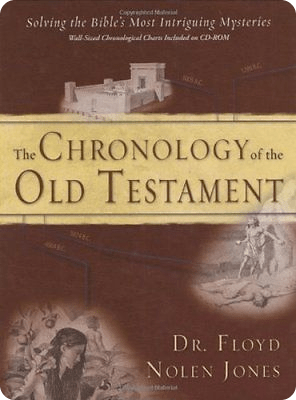
ChronologyOfTheOldTestamentWhile on the topic of Bible chronology, I must mention “The Chronology of the Old Testament” by Floyd Nolen Jones, published by Master Books. This book receives my highest commendation.

Want to hear more?

Water-dragon-wallpaper

Two of the major roles in the story are reptiles. Well, Satan is represented as a reptile, but leviathan also has a starring scene. For the entire 41st chapter of the Bible’s book of Job, God is speaking about nothing but this sea monster and the lessons we can learn from him. In fact, these are God’s concluding remarks and Job agreed that this was sufficient prompt for repentance. As did the 41st chapter, this blog post will also focus on leviathan.

God speaks of leviathan as a monstrously huge, fire-breathing, invincible reptile. In legends and mythology, the word for this would be dragon. The scientific name might be dinosaur, but this term does not strictly include all large reptiles. Whether leviathan was a dinosaur or not, he certainly was a terrible lizard.

For the story, we are using some back-story to explain our model for this monster. To start with, we will address this idea, expressed in some Bible edition footnotes, that leviathan was a crocodile. When was the last time you saw a fire-breathing crocodile? OK, so while this is clearly an error, it may not be as far off as it first seems. If you significantly increase the size, add a fire-breathing feature and extend the armour plating, then this could fit the Biblical description. What is interesting is that there is fossil evidence of extremely large crocodiles, called sarcosuchus, that many Biblical creationists think may be a good candidate for leviathan. He even has a large bulb on the end of his snout, which could house the chemical factory for igniting the flame. You can find this mentioned on AiG’s website as well as the book “Dragons of the Deep” by Carl Wieland, published by Master Books, and the video “Dragons or Dinosaurs” produced by Cloud Ten Pictures.

To this we have added to our model a methane chamber and gastrolith dust. When circus performers breathe fire, they spit some flammable substance out of their mouth, igniting the stream with a flaming torch. Our leviathan has a methane chamber for collecting digestive gases, to be expelled at will from the mouth. In conjunction, “his neesings” would ignite the expelled methane stream. This concept is reminiscent of the bombardier beetles’ chemical chambers. Also, many animals of this type have gastroliths, which are stones in the leading section of the digestive tract. These stones would rub together, over time, making sand and dust. As the methane is expelled, some of the dust would be caught up and also expelled, thus being super-heated, forming sparks.

God talks about leviathan for quite some time, and this will be quoted, by God, directly from the Bible, in the movie. So, this will give us ample opportunity to show off the attributes of this magnificent creature.

Want to hear more?

poor

Luke 4:18-19
18 The Spirit of the Lord [is] upon me, because he hath anointed me to preach the gospel to the poor; he hath sent me to heal the brokenhearted, to preach deliverance to the captives, and recovering of sight to the blind, to set at liberty them that are bruised,
19 To preach the acceptable year of the Lord.

Luke 7:22 Then Jesus answering said unto them, Go your way, and tell John what things ye have seen and heard; how that the blind see, the lame walk, the lepers are cleansed, the deaf hear, the dead are raised, to the poor the gospel is preached.

Jesus was anointed to, among other things, preach the gospel to the poor, and that is what he did. The Job Project has the same objective. Gospel literature is a worthy ministry with a powerful impact. The vast majority of the poor either cannot or will not read. So, we are making a free movie, since the poor often can and do watch videos, especially when there is no cost.

There is a ministry called Carpathian Mountain Outreach that hikes into the mountain villages of the Ukraine, sets up a movie venue, invites people to come watch a video, and the villagers come. The video shown delivers the gospel. The Job Project is aiming to make a movie that can be used in this manner and many other ways.

The Job Project movie will be copyrighted, but there will not be any restrictions on how it can be used or distributed. Please feel free to share, upload, download, rip, burn, sell, rent, show to groups, or charge admission, as you see fit.

Want to hear more?