Archives for category: Articles


hello-in-100-languages

The concept of having “back story” is that little to none of this would be included in the book or screen play. There would just be hints, implications, or assumptions that touch on these topics, giving depth to the cultural setting of the story. Here is some of the back story regarding the impact of the Babel dispersion.

It took about a hundred years, but the technology was finally re-established, and in full production to again make the pre-flood product, beetle lights. These lights mimic the light production of the illuminated insects that use chemicals to produce a cold light in a pale yellow colour, with a touch of green.

The light from this device is intense enough that it is ample for reading, more so than a candle. The appliance itself is a medium-sized box, with a triangle-shaped knob on the side to turn on the light with a clockwise turn, then off again with another clockwise turn. The light comes out the entire bottom and the lower half of one side of the box.

The top of the box has a lid that opens to add fruit scraps. The first stage of the chemicals in the appliance convert the fruit into the chemicals needed for the second stage, that produces the light. The apparatus lasts for several years of daily use, then the chemicals run out and it needs to be reloaded at the production facility.

There were seven production facilities in Shinar. Soon after that, the confusion of languages caused a lot of fighting, during which three of the machines were damaged beyond repair. This did not take much damage, since the knowledge to repair them no longer existed. Between the death of one key technologist, and the creation of new languages, the combined knowledge needed to build, or repair, the machines no longer resided within any one language-tribe. Operating the machines was still possible, as were minor repairs and maintenance.

Of the remaining four machines, three were moved to other regions, and two did not survive the move. The one remaining machine in Shinar failed beyond repair, after about 7 decades, leaving the one in Ur as the only remaining beetle light production facility in the world, at the time of the story.

Want to hear more?

whySuffering

One of the main excuses people give for rejecting the idea of a loving God, is the fact that there is so much suffering in this world. Their rationalized logic goes something like this: since there is suffering, then God is either not capable of ending the suffering, or He does not want to end the suffering; therefore, if there is any God at all, then He is either powerless or tyrannical. The existence of suffering means that God cannot be both all loving and all powerful, so He is not the God of the Bible.

For example, Charles Templeton decided to reject the omnipotent, benevolent God of the Bible, after “serving” Him for several years in the ministry, when he saw a photo. The photo was a picture of a mother crying because her baby was dying. His reasoning was that the baby was dying because of a drought and no one but God controls the weather, so this suffering disproved the existence of the God of the Bible.

Some would call this line of reasoning by the term “philosophy,” but that would not be exactly the correct word for it, since philosophy means the love of wisdom, and there is nothing wise about it. Since the gap in this logic is hidden, so that the conclusion seems reasonable, the correct word for this would be “sophistry.” Let’s turn to the Bible to shed light on this ideology to show it for the fallacy that it is.

In Genesis we see that God created everything very good. This evaluation was by God’s own standard, so it was perfect. There was no suffering in Eden. Of course, if we lived in Eden today, the foundation for the fallacy against a loving God would not exist. So, are we done refuting the sophistry? No, not yet. If we stop here, we have Deism; those who believe God created, but lacks the love or power to prevent suffering today. It is the suffering today that is the foundation for the sophistry. A Deist would argue that Eden is just a story made up to get God off the hook.

So, we need some more insights from God’s Word. In Genesis we see that the world was cursed due to Adam’s sin. God warned them not to eat from the tree of the knowledge of good and evil. Adam rebelled against God’s throne, against God’s commandment, and plunged the world into sin, death and suffering.

Let’s park here for a minute, before we go on, to look at the correlation between sin and suffering. It is not always some specific sin of mine that causes some specific suffering of mine, is it? Let’s look at some examples.

Job 1-2

According to God, Job’s trial of faith was not due to his sin. God said to Satan that Job was destroyed without cause.

John 9:1-3

Sometimes people suffer because of their own sin, sometimes people suffer because of someone else’s sin, e.g., Adam’s sin. Jesus said this blind man suffered “that the works of God should be made manifest in him.”

Isaiah 52:13-53:12

Luke 24:25-27

It is clear that Christ suffered for our sins, since He had none of His own sins.

OK, so we can see that there is not always a direct correlation between a specific sin of mine and some specific suffering of mine. I will point out why this is important a little later.

For now, we are back to the stage in our Biblical analysis where the world is suffering because of Adam’s sin. So, have we been successful in moving the blame for suffering from God’s shoulders and placing the blame on Adam? Close, but not quite. Why not? Because our antagonist, though his argument is weakening, still counters that God is punishing us for Adam’s sin and that is not just, so God is not good. This is an attempt to put the blame back on God, using smoke and mirrors. It is still the same sophistry, but it is starting to be easier to see the foundation crumble when we realize that all have sinned. Isaiah 53:6 “All we like sheep have gone astray; we have turned every one to his own way; and the LORD hath laid on him the iniquity of us all.” Throughout history, we have proved that we would have done the same as Adam. It is as if Adam represented us in the trial. Even though he was in a perfect environment, with no hardships, no lack of necessary knowledge, no degradation of mental capabilities from genetic faults, he still rebelled against God.

The last vestige of an argument from God’s antagonist is that God should not have allowed sin, thus suffering, into the world at all. This idea is so weak that it is almost self-refuting, but let’s look to God’s Word again to finish. I will grant that God knows better than us, so who are we to question the way He runs the universe. Even though I will grant that, an unbeliever will not. God’s Word has given us some insights into why sin is allowed, so let’s look at some of them.

There are at least three Biblical reasons that this last argument does not stand:

1) God made paradise on Earth. There is a second paradise, also made by God, where there is no suffering. We ruined Eden with our sin, but sin will not be allowed into the new paradise. If it were not for the sin of mankind, no one would die, and there would be no suffering, painfully hard work, disease or thorns. This evil is temporary, and ends in Heaven. So, God has made a world where sin is not allowed and you can choose to go there. This life is your time to decide.

2) God has a purpose for suffering. We learn a lot from suffering. Satan carries out the evil, but God can use all of it for good. It is the knowledge of good and evil. One of the ways we learn about God is by getting a taste of what the world is like without Him. It is like the black in the painting that brings out the colours more brilliantly. Here is where it helps to remember that there is not always a direct correlation between some specific sin of mine and some specific suffering of mine. God created the tree, now we have an entire world of knowledge of good and evil. This life is your time to decide.

3) God made us in His image. If He did not make us with a will to choose, then it would be the same as not making us at all. In order for us to do good, then there must be an alternative. Some claim it is unjust for God to create us with the ability to sin, then punish us when we do. Those same people are stealing God’s own standards of right and wrong, justice. This standard is then applied backwards. It was not evil for God to create us with a will to choose. Furthermore, it is your own decision when you sin, and God’s justice demands condemnation for evil. Do you really want justice, or would you rather have forgiveness? This life is your time to decide.

In the book of Job we have some lessons about the reasons for pain, death, and suffering in this world. Notice that evil men attacked and killed Job’s servants and stole his possessions. God attributed these evil actions to Satan. The point here is not to say that people are not responsible for their own evil actions, but that Satan was the conspirator behind all of this destruction and loss.

There are definitely occasions when we suffer because of our own sin, but one of the main points of the book of Job is that he was suffering in spite of his righteousness, even because of his righteousness. God said to Satan that Job’s destruction was without cause. This helps us to understand that suffering is not evidence of unrighteousness. This seems obvious, since it is easy to find examples, in the Bible and in our own experiences, of those who suffered for righteousness. But that is the very mistake made by Job’s three friends. They claimed that his suffering, and only his suffering, was sufficient evidence to prove that there must be some hidden sin in his life. We can learn from their mistake, or face God’s rebuke, as they did. God convicted them of folly and sentenced them to repentance and offering of sacrifices.

God knows best. We can learn from the book of Job that God is in control of, and limits the influences of, the evil affecting our lives. We can trust Him to gauge and foresee the blessings that only He can envision resulting from our trials. Jesus suffered unimaginably, then died on a cruel cross. From an earthly perspective, this was the most tragic event in history. Not only was it the most agony ever suffered, but it was the highest injustice, due to His complete innocence. From an eternal perspective, this same event was the pinnacle of history. No greater deed has been done. No greater love has been shown. The contrast between these two perspectives, of the same historical event, is a wide chasm. We cannot see across this chasm. We cannot judge, from our limited earthly perspective, the whole picture. Since we cannot see from God’s perspective, until He shows us, we also cannot reject the idea of a loving God on the basis that there is so much suffering in this world.

Psalm 119:71 [It is] good for me that I have been afflicted; that I might learn thy statutes.

Want to hear more?

nodosaur-pic

It seems like there would be popular interest in including dragon domestication in the story. This practice was historically documented by Marco Polo centuries later, so it is feasible to add to the depth of the culture.

There would also be opportunities for some physical gags. Though The Job Project is not a comedy, it is welcome to have some comic relief interspersed with heavy topics, so people can stay with you. It improves the educational value of the presentation when humour is tastefully and skilfully included. I don’t think anyone has done better at this than Ken Ham.

We would like to hear your ideas how a dinosaur could be included, as a pet, a work animal, or KFD, etc.

Want to hear more?

The words of Saint Elihu.

StElihu

http://vimeo.com/10741322
My three oldest children produced this short (9 min.) audio drama for All Saints Day 2009.

In this case we are using the word “saint” in the Biblical sense, rather than the colloquial or religious sense.

Want to hear more?

Jester_Hat

Considering the nature of this topic, it seemed best to post the statement of faith and doctrine before this post, for a frame of reference. As an introduction to the teachings of The Job Project website blog, it may seem strange to start with a quote from the following verse.

1 Kings 20:23 And the servants of the king of Syria said unto him, Their gods [are] gods of the hills; therefore they were stronger than we; but let us fight against them in the plain, and surely we shall be stronger than they.

Really, this verse could be a very good starting point for a thesis on systematic theology. This article is no such thesis. The reason the verse is a good starting point is because it is wrong. Yes, it is historically accurate, since this report of the Syrians giving this advice is true. It is wrong in a different way. Here it is saying, in the Holy Scriptures, that the God of Israel can only help armies when they are in the hills. I know it does not bother you to be reminded of this flawed reasoning in the Bible, since the context makes it clear that it is wrong — quite clear.

1 Kings 20:28 And there came a man of God, and spake unto the king of Israel, and said, Thus saith the LORD, Because the Syrians have said, The LORD [is] God of the hills, but he [is] not God of the valleys, therefore will I deliver all this great multitude into thine hand, and ye shall know that I [am] the LORD.

This clarity makes it a good example of a principle of Bible interpretation. You might have noticed that different people come up with different interpretations of what the Bible means. This is to be expected, since there is no limit to the possible errors we can make, causing misunderstanding and faulty interpretation.

It is outside the scope of The Job Project to teach all of the principles of Bible interpretation, but one that applies to the book of Job is that we need to interpret Bible verses in context. In the last portion of the book of Job, God is talking. God condemns some of sections of the book of Job as “folly” and some other parts as “words without knowledge.” Of course, God wants us to base our doctrine, and our lives, on trustworthy knowledge, rather than folly. So, we can completely expect to be able to discern between them, from the context. After all, the Bible cannot be fully authoritative, unless God has given us some reliable way to tell which parts of the record are sound, and which parts God has deemed as folly.

The next blog post will begin to elaborate on this distinction, through an audio drama.

If I say, “I am wearing yellow,” does that mean every thread of my clothing is coloured yellow? On the other extreme, does it mean that some insignificant, hidden thread, holding the toe of my left sock sewed shut, is the only yellow in my apparel? What if I tell you this over the phone, as I am describing my appearance, so you can recognise me, because we are about to meet at the airport? Picture that. Did you imagine someone wearing a shirt or jacket that is mostly yellow? Even with something as simple as the colour of clothing, context makes a difference.

A word can have a very different meaning when used in one context compared to another context. Even a phrase or a sentence can have a different meaning in much the same way.

There are various forms of context that we find in the Bible. The immediate context includes those words that are used together, and the sentence structure, which will help us understand the meaning. So, this is like grammar and syntax, as well as the surrounding passages leading up to and following the text, which can give insights into the intent. There is also the audience. When the words are directed to one group of people, the meaning can be somewhat different than if the audience is another group. Topical context is another very important component in our Bible studies since we can gain a better, more complete, picture of the teaching when we take into account all of the passages in the Bible that inform the subject. In addition, it is good to consider the source. So this is another context based on who is speaking and what effect that has on the meaning of what is being said.

The content of the Bible is not changing, so we can construct a full picture of a teaching by studying all of these contextual views throughout all of Scripture. The biblical phrase for this is: Rightly dividing the Word of Truth.

For example, in Judges 6:23, Gideon is told, “thou shalt not die.” Devoid of the context of the events surrounding this statement, there are several meanings that this short phrase could have. We could have quickly set aside the possibility that the pronouncement is a lie, since the context is that God is telling this directly to Gideon. But, what if Gideon is mistaken, and just thinks God is telling him this? What if he is just imagining that it is God telling him, or he is being misled to think so? Without context, we do not know. Maybe Gideon is being told that he would be like Enoch, who did not die because God caught him up to Heaven instead. Maybe this is just a spiritual death that Gideon will not experience. If it really is referring to physical death, then maybe Gideon is being told that he would live on Earth forever. Maybe he is still alive today! Maybe the world could end before his death! It is likely there are other possibilities that are not listed here. When we look at the context, it is easy to understand “thou shalt not die” means his death is not imminent, and that this conversation with God would not be the reason for his death.

Want to hear more?

StatementOfFaith

Statement of Faith:

1 Peter 1:3-5
3 Blessed [be] the God and Father of our Lord Jesus Christ, which according to his abundant mercy hath begotten us again unto a lively hope by the resurrection of Jesus Christ from the dead,
4 To an inheritance incorruptible, and undefiled, and that fadeth not away, reserved in Heaven for you,
5 Who are kept by the power of God through faith unto salvation ready to be revealed in the last time.

Hebrews 11:1-3,6
1 Now faith is the substance of things hoped for, the evidence of things not seen.
2 For by it the elders obtained a good report.
3 Through faith we understand that the worlds were framed by the word of God, so that things which are seen were not made of things which do appear.
6 But without faith [it is] impossible to please [him:] for he that cometh to God must believe that he is, and [that] he is a rewarder of them that diligently seek him.

1 Corinthians 2:5 That your faith should not stand in the wisdom of men, but in the power of God.

Romans 4:5 But to him that worketh not, but believeth on him that justifieth the ungodly, his faith is counted for righteousness.

Ephesians 2:8-9
8 For by grace are ye saved through faith; and that not of yourselves: [it is] the gift of God:
9 Not of works, lest any man should boast.

James 2:17 Even so faith, if it hath not works, is dead, being alone.

1 Corinthians 16:13 Watch ye, stand fast in the faith, quit you like men, be strong.

Revelation 2:10 Be thou faithful unto death, and I will give thee a crown of life.

Statement of Doctrine: A summary of some things which are most surely believed among us. Many of us Christians are united in our stance that the Holy Bible is the authority, yet we disagree regarding some points of meaning. Here lists our view on topics of common interest.

Our Lord Jesus Christ is The Way, The Truth, and The Life and no one can come to the Father but by Him. Jesus is God in the flesh, born of the virgin Mary with no human father, fully human and fully divine.

The Holy Godhead is eternally existent and triune; one God, three Persons: Yahweh, God the Holy Father; Jesus Christ, God the Holy Son; and the Comforter, God the Holy Ghost, who indwells all New Testament believers.

Our Lord Jesus Christ: died on the cross and suffered, taking the punishment for the sin of all humanity; was buried; rose bodily from the dead, conquering death for us; was seen resurrected by many infallible proofs and witnesses; ascended to Heaven; is currently seated at the right hand of God the Father; and shall return, in manifest glory, to this Earth as Judge of the living and the dead.

The 66 books of the Holy Bible are inerrant. God has preserved His Word without error as proclaimed by the Holy Spirit through the prophets by inspiration. The miracles recorded in the Scriptures are real, historical, super-natural events, rather than fiction or myth.

About 4,000 years before Christ was born, God created the world, from nothing, in six days that were consecutive, regular, 24-hour days, rested the seventh day, and has been working ever since.

Eden of primal Earth was paradise, without sin, suffering, or thorns, where no one would have died. By God’s standard, the world was very good. Adam’s rebellion against the throne of God brought a curse on the creation and that paradise was lost. Each man and woman has also gone astray, rebelling against the law of God, proving that we too are sinners, like Adam. God has also made a new paradise, where sin and suffering do not exist, and you can go there. This life is your place to choose.

Hell is a literal place of eternal judgement and torment created by God for the devil and his angels. All men and women, who die rejecting God’s mercy, will be condemned to hell without hope of deliverance. God has no pleasure in the death of the wicked, and is not willing that any should perish, but that all should come to repentance. This life is your place to choose.

Human life is sacred from conception to eternity. Human beings are created in the image of God and are to be honoured, regardless of one’s perceived value, or quality, of that life. God and His Word have exclusive authority regarding when it is just for mankind to take a human life.

Marriage is an institution of God. He designed marriage for one man and one woman to become one flesh from the wedding until death parts them.

Government is an institution of God. “The most High ruleth in the kingdom of men, and giveth it to whomsoever He will, and setteth up over it the basest of men.” Daniel 4:17

The Church is an institution of God. As high priest, Jesus is the Head of the Body of Christ, and every believer is a member.

The global flood, of Noah’s day, destroyed the Earth. All land creatures on Earth died, in whose nostrils was the breath of life, except those saved on the ark.

Baptism is of believers; in the name of the Father, and of the Son, and of the Holy Ghost; as a testimony of faith; by immersion in water; following the example and instruction of Our Lord.

The Bible doesn’t say precisely when Job’s trial of faith happened, or even how old he was at the time. There are some hints that might help us narrow down the time frame. Within the Biblical possibilities, we have then chosen dates that make for a good story.

There are several factors that undoubtedly place the events after the flood. To narrow it down further, we can look at clues about Job’s age, plus some tribal and geographic references. Considering that Job had ten children, and all seven of his sons had homes of their own, it seems that he must have been at least 60 at the time of his trial of faith.

“After this Job lived 140 years …” The way this phrase is used in other parts of the Bible, it always means that these were additional years after the event, so it was not his total life span. Also, Job was doubly blessed in several other ways after his trial, so maybe he had lived 70 years, before the time of the trial, then lived twice as many years after, to a total of 210.

Those living before the flood generally lived over 800 years, after the flood over 400 years, after the dispersion from Babel over 200 years, then life spans tapered down from there to the time when Moses said men generally lived about 70 or 80 years. The Bible seems to give the impression that grandchildren were only a part of Job’s family after the trial. So, it doesn’t really fit if Job was among those who lived over 400, since you would think he would have had grandchildren long before the final 140 years of his life. So, “being old and full of days” at 210 would put Job in the post dispersion generation.

Also, he was the “greatest of the men of the East” and he lived in “the land of Uz,” plus he was attacked by the Sabeans and the Chaldeans. These regional and tribal references all assume geographically dispersed and tribally segregated groups of people. This also places the events after the dispersion. But, the time frame is not likely many centuries after the dispersion, since “the East” would have been much farther, as significant civilizations developed in Asia. The land of Uz has its western border at the Jordan River. Also, God mentions the Jordan River when He is speaking of behemoth. So, it doesn’t seem possible that enough time had passed, so that “the East” would refer to, say, India.

For the story, it seems fitting that God might single out Job as having no equal in the Earth, as a servant of God, shortly after the death of Noah.

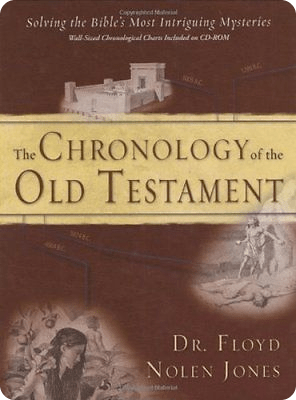
ChronologyOfTheOldTestamentWhile on the topic of Bible chronology, I must mention “The Chronology of the Old Testament” by Floyd Nolen Jones, published by Master Books. This book receives my highest commendation.

Want to hear more?

AfterTheFlood.png

There is an amazing book by Bill Cooper called “After the Flood” published by New Wine Press. Much of the book correlates directly to The Job Project, due to the time period covered. The people in The Job Project story generally belong to the Shemite line, since it is after the dispersion from Babel and they are in Ur of the Chaldeas. We thought it would be fun to use some of the information from Mr. Cooper’s book to tie in the Japhetic line by including a visiting travel guide from Macedonia. Our fictitious character’s name is Scott son of Fearon, which just happens to be my cousin’s name, Scott McFeron. The Celtic Irish Kings list in “After The Flood” includes a descendant of Magog, of the Japhetic line, named Fearon. This historical figure would pre-date the time frame of The Job Project. This also pre-dates the migration of the Celts from Macedonia to Ireland. Many of the Celtic Surnames come from prominent ancestors, such as Fearon, and the McFeron ancestry can be traced back to the north of Ireland and Scotland.

On a previous post we discussed the possibility that a tune has been passed down through the ages and we have lost track of the origin. In addition to the score of the movie, mentioned in that post, we have thrown in another tune of ancient origin. Scott hears a tune composed by Noah, and liking it very much, he begins whistling it himself, when departing the scene. The tune is called Slane, which has an ancient Irish heritage, and is the tune to the “Be Thou My Vision” hymn.

musical-notes

There are some tunes, to the music we sing today, for which the origin is not known, yet we know it is centuries old. One such tune is called Palestrina, aka, St. Denio, which is the tune to the “Immortal, Invisible” hymn. This will be the score of the movie. Thousands of angels will be playing this, as a brass orchestra, while God is speaking from the cyclone.

It is interesting to think that a melody could have been passed down through the ages, since they transcend culture, language and time. What if there is a tune that we have mis-attributed to a composer, when they did not actually write it themselves, but rather learned it when travelling to another land, for example. There is no telling if we today are singing to a tune written by God Himself.

Want to hear more?

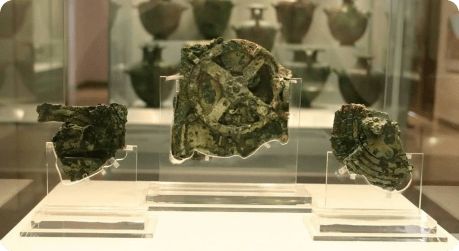
Antikythera-Mechanism

There is an awesome book by Donald Chittick, called “The Puzzle of Ancient Man” published by Creation Compass. It talks about the apparently lost knowledge that humans once had, in very ancient times, that we today either don’t know or have only recently re-discovered. For example, it is clear that men moved stones so large that we could not move them with current technology. The time frame in history for the story of The Job Project lies within this mysterious zone of technology.

One product we have invented for our story we call the beetle light. It is a lighting appliance that produces chemical cold light in a similar manner to lightning bugs, etc. As part of the story, we hint at how the dispersion brought the demise of the knowledge needed to continue producing these lights. So, this aspect of the story could put it into the science fiction category. At the same time, no one has an automobile, telephone, or even a banana, and writing is only beginning to become widely used.

Want to hear more?